-
- Plantago spp. (Plantain)
→http://en.wikipedia.org/wiki/Plantago
Common plantain - Source
→http://www.pfaf.org/user/Plant.aspx?LatinName=Plantago+major - • Nutrient accumulator
- • Medicinal - I have found it to be especially good for insect stings and spider bites.
- • Edible - Samuel Thayer
says it is not much as a food, but Elias & Dykeman
recommend it with emphasis on collecting and grinding the seeds into a flour that is used to make pancakes.
- Plantago spp. (Plantain)
-
- Portulaca oleracea (Purslane)
→http://en.wikipedia.org/wiki/Portulaca_oleracea
→http://www.missouribotanicalgarden.org/PlantFinder/PlantFinderDetails.aspx?kempercode=a603
→http://www.motherearthnews.com/organic-gardening/power-packed-purslane.aspx
• Medicinal - this plant has traditionally been used by many different cultures throughout
Purslane - Source
the world for many different symptoms, having been especially used in traditional Chinese medicine. Scientific studies have been performed on the effectiveness of purslane in dealing with a variety of medical concerns.- • Edible - during the warm summer months this grows throughout my yard/garden and to keep it in check I make sure to eat plenty of it in my salad. In addition to being a tasty green, it is also extremely healthy, being best known as the having the most omega-3 of any leafy vegetable, as well as having good amounts of many vitamins and minerals. Check out the wikipedia link to see the whole nutritional listing.
- • Companion - this plant makes a pretty good ground cover and helps maintain moist soil. Some plants, including corn, will "follow" purslane roots through harder soil that they could not penetrate on their own.
- • Nutrient accumulator - its impressive list of beneficial minerals helps indicate just how well this plant does at finding and collecting nutrients.
- • Decorative - many nurseries actually sell purslane as a decorative ground cover.
- • Self-reseeding - it can even finish ripening the seeds after the plant is pulled up.
- • Chicken and rabbit feed - both of these animals can gain great nutritional benefits from purslane.
- Portulaca oleracea (Purslane)
-
- Taraxacum officinale (Dandelion)
→http://www.wildmanstevebrill.com/Plants.Folder/Dandelion.html
→http://pfaf.org/user/Plant.aspx?LatinName=Taraxacum+officinale
→Specimen Spotlight: Dandelion
• Insectary - as a very early starting plant (I've seen green plants of this species in February), it is often one of the first sources of food for bees. In addition, it continues flowering from early spring throughout the summer, providing for a hungry host of helpful insects.
Dandelion flower - Source - • Nutrient accumulator
- • Thrives on neglect
- • Shade to full sun
- • Edible - it is becoming a very popular salad green. Be sure to pick the leaves before the plant flowers, otherwise they tend to turn bitter. The flowers add some nice color to a salad. You can also eat the large taproot. Cook it like you would other root vegetables such as carrots, parsnips, or potatoes.
- • Perennial and self-reseeding
- • Medicinal - as is the case with most, if not all, nutrient accumulators. It has been theorized that the ability of these plants to gather hard-to-reach nutrients might have something to do with their medicinality.
- • Flowers! - okay, so dandelion flowers may not seem like much to look at, but little children love them!
- Taraxacum officinale (Dandelion)
-
- Chenopodium album (Lamb's quarters)
→http://pfaf.org/user/Plant.aspx?LatinName=Chenopodium+album
→http://www.ipm.ucdavis.edu/PMG/WEEDS/lambsquarters.html
→http://www.susunweed.com/herbal_ezine/September09/healingwise.htm - • Edible - I add the leaves in moderate quantities to my spring and summer salads. The
seeds can be used to create a flour or are cooked like rice - just be certain to rinse well to remove the bitter saponins. A sibling of quinoa and a cousin of spinach. The early shoots can be cooked and eaten like asparagus. Excellent source of vitamin A, vitamin C, and calcium.
Lamb's quarters - Source - • Companion - very friendly towards corn; also benefits cucurbits, such as cucumber, pumpkin, and watermelon. Louise Riotte
also says that it invigorates zinnias, marigolds, peonies, and pansies.
- • Nutrient accumulator - The Rodale Herb Book
indicates that the long tap root does a good job of pulling up nutrients from the soil.
- • Self-reseeding - the seeds are pretty tiny, and there are lots of them just on one plant, so it doesn't take much for one plant to become a lot of plants.
- • Wildlife - speaking of seeds, this plants seeds are used by a variety of small mammals and birds as a significant food source.
- Chenopodium album (Lamb's quarters)
-
- Amaranthus retroflexus (Redroot pigweed)
→http://www.ipm.ucdavis.edu/PMG/WEEDS/redroot_pigweed.html
→http://pfaf.org/user/Plant.aspx?LatinName=Amaranthus+retroflexus
→http://www.bio.brandeis.edu/fieldbio/Edible_Plants_Ramer_Silver_Weizmann/Pages/spp_page_amaranth.html
• Edible - as a wild variety of amaranth, the seeds are quite tasty albeit very small. They can be ground into flour or cooked as they are. They make a great thickener for a soup to give it more substance. You can also eat the young greens just as you would spinach. Very rich in iron and a good source of vitamins A and C.
Redroot pigweed - Source - • Dye - can be used to make red, green or yellow dyes
- • Drought resistant - and handles hot weather just fine, too. At least, I never noticed that it was wilting in the sweltering heat of Kansas (or Utah) in late July.
- Amaranthus retroflexus (Redroot pigweed)
-
- Lactuca serriola (Prickly lettuce)
→https://en.wikipedia.org/wiki/Lactuca_serriola
→http://commonsensehome.com/prickly-wild-lettuce/
→http://www.naturalmedicinalherbs.net/include/searchherb.php?herbsearch=prickly+lettuce&x=0&y=0
• Edible - raw leaves which are best eaten while still very young, before there are much if
Prickly lettuce - Source
any spines. They go great in a green weed salad! Considered the wild progenitor of domestic lettuce, which means it has not been selectively bred over time to be extra tasty. And that might explain why some use it as the bitter herb in their Passover meal. It is possible to use the young shoots as an asparagus substitute. And the seeds produce an edible oil that, when refined, is considered to have a pleasant flavor.- • Medicinal - this pioneer is very widespread, so the medicinal uses vary. The Navajo used it as an emetic (vomit inducer) and the Ancient Greeks as a treatment for eye ulcers. The sap, or "milk", is, according to PFAF, "used for its anodyne, antispasmodic, digestive, diuretic, hypnotic, narcotic and sedative properties."
- • Insectary - the flowerheads provide nectar and pollen which are used as sources of food by bees.
- • Self-reseeding
→http://www.pfaf.org/user/Plant.aspx?LatinName=Lactuca+serriola
→http://www.illinoiswildflowers.info/weeds/plants/prickly_lettuce.htm
- Lactuca serriola (Prickly lettuce)
-
- Veronica spp. (Speedwell)
→http://www.pfaf.org/user/Plant.aspx?LatinName=Veronica+agrestis
→http://en.wikipedia.org/wiki/Veronica_(plant)
→http://www.herbs2000.com/herbs/herbs_speedwell.htm
→The Secrets of Wildflowers: A Delightful Feast of Little-Known Facts, Folklore, and History - • Insectary

Speedwell - Source - • Thrives on neglect
- • Groundcover - it can outcompete grass. This may or may not be a plus, depending on if and where you want grass. But you can use this as a mix with other "trample-friendly" plants, such as clover, to create a less resource-hungry yard.
- • Edible - although just barely. Ken Fern considers it a famine food - only good when you have nothing else.
- • Self-fertilizing, self-reseeding and some species put out runners
- • Medicinal - the benefits of each species vary somewhat
• Flowers! - these are often quite small and easy to miss, but they are beautiful when they are noticed
- Veronica spp. (Speedwell)
-
- Erodium cicutarium (Redstem Filaree or Stork's Bill)
→http://www.pfaf.org/user/Plant.aspx?LatinName=Erodium+cicutarium
→http://en.wikipedia.org/wiki/Veronica_(plant)
→http://www.herbs2000.com/herbs/herbs_speedwell.htm
→http://www.eattheweeds.com/erodium-circutarium-geranium-carolinianum-two-bills-you-want-to-get-2/ - • Insectary

Stork's Bill - Source - • Thrives on neglect
- • Drought and heat resistant - tends to be found more in hot and dry regions, so naturally it doesn't tend to stress out when the weather is hot and dry.
- • Dye - makes a green dye and does not need a mordant to set the color.
- • Groundcover - it tends to stay low to the ground, which makes it survive mowing. Being a hardy plant, it also can handle a decent amount of foot traffic.
- • Edible - the entire plant is fine either raw or cooked and is best when young, which is also when it tends to taste similar to parsley.
- • Self-reseeding and some species put out runners
- • Medicinal - a leaf tea is used to induce sweating and as a diuretic.
• Flowers! - quite pretty in their simplicity
- Erodium cicutarium (Redstem Filaree or Stork's Bill)
-
- Lamium amplexicaule (Henbit or Henbit Deadnettle)
→http://www.pfaf.org/user/Plant.aspx?LatinName=Lamium+amplexicaule
→http://www.ediblewildfood.com/henbit.aspx
→http://plants.usda.gov/java/profile?symbol=LAAM
→Edible Wild Plants by Thomas S. Elias and Peter A. Dykeman, pg. 116 - • Insectary - important early source of pollen and nectar to honey bees.

Henbit - Source - • Common name given because many chickens especially like to eat this plant
- • Hummingbirds also like this plant for the nectar in its flowers
- • Edible - the whole plant can be eaten or used to make a tea. Although it is in the Mint family, it does not have a mint flavor. Some say that it tastes similar to kale, which is why I recommend it mostly as a salad add-in. Also, you can pick the flowers and suck the nectar out of them, which kids seem to love doing.
- • Self-reseeding and can put down roots from stems that are pressed against the ground (layering).
- • Mildly medicinal
• Flowers! - if you look close, you can see that these are quite exquisite flowers: they remind me of orchids.
- Lamium amplexicaule (Henbit or Henbit Deadnettle)
-
- Rumex crispus (Narrow-leaved Dock)
→http://www.pfaf.org/user/plant.aspx?LatinName=Rumex+crispus
→http://www.illinoiswildflowers.info/weeds/plants/curly_dock.htm
→https://en.wikipedia.org/wiki/Rumex_crispus
→http://www.eattheweeds.com/rumex-ruminations/ - • Wildlife - Many birds and some small mammals use dock seeds as a wintertime food source.

Narrow-leaved Dock - Source - • Drought resistant
- • Dye - the root is used to make a dye varying between mustard and brown
- • Edible - but often bitter. However, sometimes bitter is good/desired.
- • Self-reseeding and can put down roots from stems that are pressed against the ground (layering). The seeds can remain viable for more than fifty years!
- • Medicinal - used to increase red blood cell count and as a treatment to external wounds, among many other things.
- Rumex crispus (Narrow-leaved Dock)
Showing posts with label list of ten. Show all posts
Showing posts with label list of ten. Show all posts
Saturday, February 13, 2016
Useful "weeds" - List of Ten
There are a lot of plants in urban/suburban areas, and throughout North America and the world for that matter, that are common weeds. However, many of these plants have good uses. Since they are hardy enough to be labeled as weeds, you know that they would require little work on your part to get them established. And when they are in the right place, they can be quite beneficial. In fact, a weed is really, as David Holmgren puts it, just "a plant out of place" (http://holmgren.com.au/wp-content/uploads/2013/02/PPQ-26-issue-3-2011-Weeds.pdf). Weeds are pioneer species doing what pioneers do: move into open areas and naturalize, or become native to that place.


Wednesday, April 24, 2013
Permaculture Plants for Utah County
The following text is the explanation, etc., but if you just want the good stuff, skip down to the List of Ten - Part I.
I searched on the internet to find a listing of plants that were especially good for Utah County. You know, a nice, comprehensive list of "permaculture-ready" plants that really like the conditions found here. Whether I was just looking in the wrong place or, more likely, such a list had not been created, I don't know.
At any rate, I decided to come up with my own list of the top twenty permaculture plants for Utah County. At first it was difficult to get beyond a small handful of plants. However, once I began to really put my mind to it, I found that twenty was way too small of a number. But could I really call them the "top" plants for permaculture purposes in this area if I started making a long list? Not so much, at least to my way of thinking.
So now I have figured out what I am going to do: I am creating a list of ten plants that have multiple uses and are known to grow in this area. Every time I come up with ten more plants I will post about them with links to the other lists of ten. Hopefully that makes sense. At any rate, eventually there should be a good amount of ideas for those that would like to increase diversity in their permaculture plot.
Just to make things clear, these plant lists do not indicate any kind of priority or placement. In other words, the plants are organized arbitrarily and where a plant shows up is not a means of showing importance or significance. Good enough? Moving on then…
Anyhow, without further ado, I present the first list of ten.
I searched on the internet to find a listing of plants that were especially good for Utah County. You know, a nice, comprehensive list of "permaculture-ready" plants that really like the conditions found here. Whether I was just looking in the wrong place or, more likely, such a list had not been created, I don't know.
At any rate, I decided to come up with my own list of the top twenty permaculture plants for Utah County. At first it was difficult to get beyond a small handful of plants. However, once I began to really put my mind to it, I found that twenty was way too small of a number. But could I really call them the "top" plants for permaculture purposes in this area if I started making a long list? Not so much, at least to my way of thinking.
So now I have figured out what I am going to do: I am creating a list of ten plants that have multiple uses and are known to grow in this area. Every time I come up with ten more plants I will post about them with links to the other lists of ten. Hopefully that makes sense. At any rate, eventually there should be a good amount of ideas for those that would like to increase diversity in their permaculture plot.
Just to make things clear, these plant lists do not indicate any kind of priority or placement. In other words, the plants are organized arbitrarily and where a plant shows up is not a means of showing importance or significance. Good enough? Moving on then…
Anyhow, without further ado, I present the first list of ten.
List of Ten - Part I
-
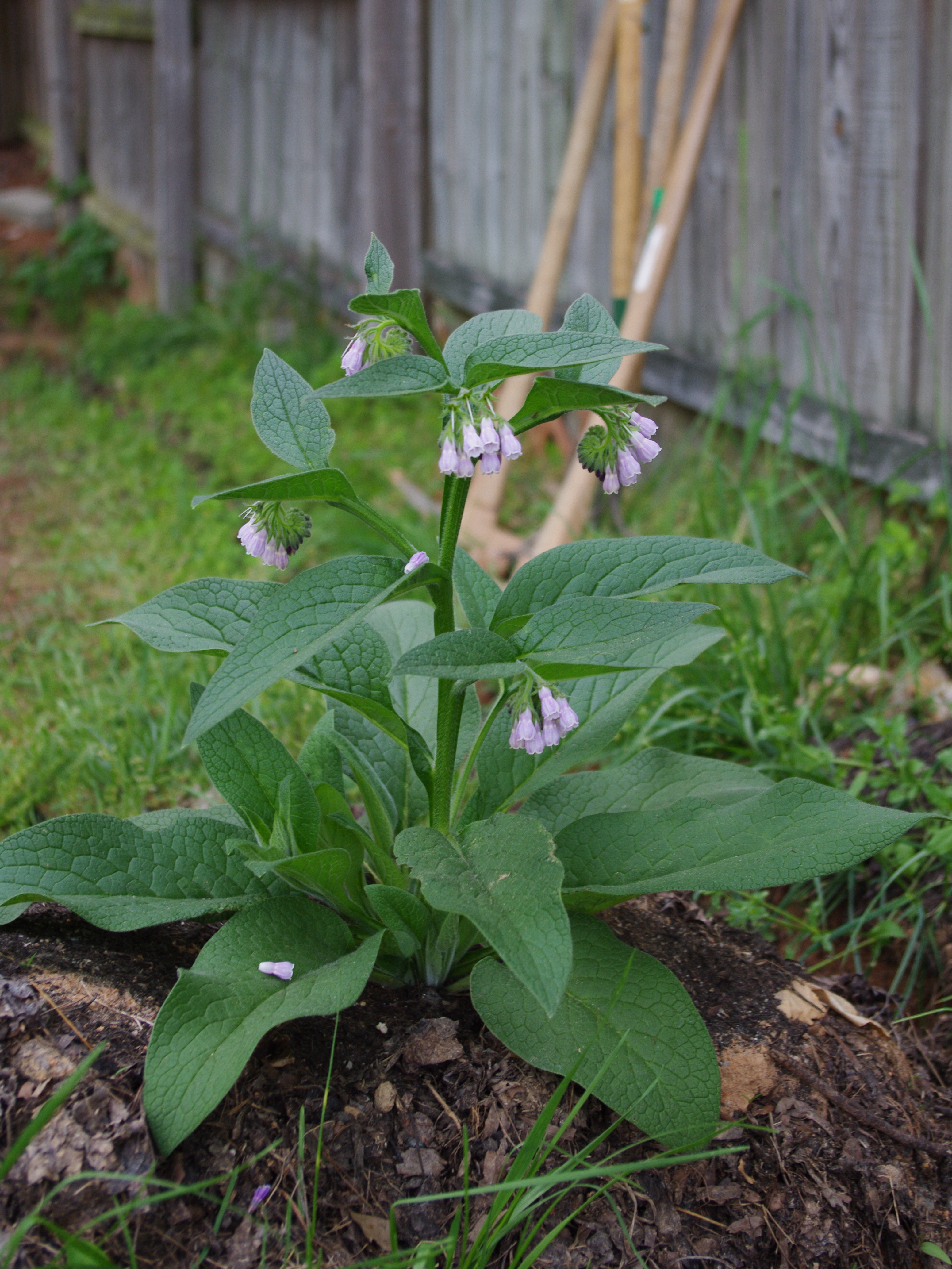
- Symphytum officinale (Comfrey)
→http://www.pfaf.org/user/Plant.aspx?LatinName=Symphytum+officinale
→Specimen Spotlight: Comfrey
• Nutrient accumulator
Comfrey - Full Size Photo - • Insectary
- • Medicinal
- • Mulch maker
- • Easy to propagate
- • Tolerates poor soil as well as high-nitrogen soil, such as on or near a manure pile
- • Dappled shade to full sun
- • Tolerates near drought to often wet, once established
- • Perennial - this should speak for itself; if you are curious about why perennial is important, read Eric Toensmeier's book Perennial Vegetables
, pp. 2, 5, 6.
- • Naturally occurring - it can be found scattered throughout Provo Canyon
• Flowers!
- Symphytum officinale (Comfrey)
-
- Amelanchier spp. (Saskatoon, Juneberry, Serviceberry)
→Specimen Spotlight: Serviceberry
→http://extension.usu.edu/range/Woody/utahserviceberry.htm
→http://www.pfaf.org/user/Plant.aspx?LatinName=Amelanchier+alnifolia
→http://sbe.umaine.edu/amelanchier/?page_id=134
• Naturally occurring - at least one species is native to this area and grows abundantly in Provo Canyon
Saskatoon berries and
foliage - Source- • Fruit (this is always my top reason for growing something: can I eat it?) - Most people like the berries, although some species have sweeter fruit than others. Birds will eat the fruit, especially those that are still on the plant in late winter.
- • Drought tolerant, once established
- • Is not picky about soil type
- • Partial shade to full sun
- • Shrub - it can grow to the size of a small tree. It can be coppiced to provide mulch material.
• Blossoms!
- Amelanchier spp. (Saskatoon, Juneberry, Serviceberry)
-
- Taraxacum officinale (Dandelion)
→Specimen Spotlight: Dandelion
→http://www.wildmanstevebrill.com/Plants.Folder/Dandelion.html
• InsectaryDandelion flower - Source - • Nutrient accumulator
- • Thrives on neglect
- • Shade to full sun
- • Edible - it is becoming a very popular salad green. Be sure to pick the leaves before the plant flowers, otherwise they tend to turn bitter. You can also eat the large taproot. Cook it like you would other root vegetables such as carrots, parsnips, or potatoes.
- • Perennial and self-reseeding
- • Medicinal - as is the case with most, if not all, nutrient accumulators. It has been theorized that the ability of these plants to gather hard-to-reach nutrients might have something to do with their medicinality.
- • Flowers! - okay, so dandelion flowers may not seem like much to look at, but little children love them!
- Taraxacum officinale (Dandelion)
-
- Vitis spp. (Grape)
→Specimen Spotlight: Grape
→http://pfaf.org/user/Plant.aspx?LatinName=Vitis+vinifera
• Vine - helps fill in the vine niche in the seven levels of a forest garden
Grapes! - Source - • Edible
- • Bird feed - birds especially like seedless varieties. In this area there enough grapes that the birds mostly ignore any grape that is not seedless while devouring those that are.
- • Medicinal
- • Climber - as a deciduous climbing vine, these plants do a great job of climbing and covering during the summer, which provides shade, and then dropping it leaves in the fall and allowing any winter sunshine available to shine through.
- • Basketry
- • Privacy fence - for those that want to make a chain-link fence a little less see-through, grape vines will vigorously grow to create an almost impenetrable covering
- Vitis spp. (Grape)
-
- Malus domestica (Apple)
→Specimen Spotlight: Apple
→http://pfaf.org/user/Plant.aspx?LatinName=Malus+domestica
• Edible
Malus domestica - Source - • Attracts wildlife - many animals, from birds to rodents to large mammals, like apples
- • Medicinal
- • Insectary - have you ever listened to an apple tree in bloom? It sounds quite similar to a bee hive!
- • Nutrient accumulator - stores potassium in its leaves
- • Dentrifice - eating an apple helps clean the teeth and gums
- • Wood - used both as a fuel and for woodworking
- • Habitat - adding a tree to a yard, especially if it is a standard-sized one, not a dwarf, will really increase the amount of creatures that can find food and shelter in that yard. And more creatures means better diversity, better balance, and the perks that each species provides just for being able to hang around.
• Blossoms!
- Malus domestica (Apple)
-
- Helianthus annuus (Sunflower)
→Specimen Spotlight: Sunflower - • Insectary

Field of sunflowers - Source - • Edible - you can eat them as microgreens, in addition to the well known sunflower seeds and the petals make nice additions to summer salads
- • Poles - my pole beans sometimes like sunflowers and sometimes do not, but I can always use last years sunflower "trunks" as teepee trellis poles without any problem
- • Self-reseeding
- • Bird seed - you don't need to do anything, the plant grows the food and then hangs it out for the birds to "harvest" at their convenience
- • Mulch - the leaves provide soft mulch and when the poles are no longer fit for use as trellises they can be chipped into short lengths or even small pieces and added to wherever some more mulch is needed or be included in a new hugelkultur mound
- • Medicinal
• Flowers!
- Helianthus annuus (Sunflower)
-
- Helianthus tuberosus (Sunchoke, Jerusalem artichoke)
→http://www.hort.purdue.edu/newcrop/duke_energy/Helianthus_tuberosus.html
→http://en.wikipedia.org/wiki/Jerusalem_artichoke
• Insectary
Sunchoke flowers - Full Size Photo - • Perennial - these are another type of sunflower, but they propagate via tuberous roots as well as by seed
- • Edible - the root tubers are a great food source, both raw and cooked. Also, just like sunflowers, the flower petals are especially nice in a salad.
- • Livestock feed - the leaves and stalks are very nutritious for grazing animals, and pigs enjoy digging and eating the tubers
• Flowers!
- Helianthus tuberosus (Sunchoke, Jerusalem artichoke)
-
- Raphanus sativus var. longipinnatus (Daikon radish)
→http://en.wikipedia.org/wiki/Daikon
→http://aggie-horticulture.tamu.edu/archives/parsons/publications/vegetabletravelers/radishes.html
• Insectary - when left to bolt, radishes, like the other members of the Brassica family, put up little yellow flowers that are appreciated by the local insects
Daikon - Source - • Soil improver - this type of radish grows a root that looks like a very large carrot, similar to a parsnip. Just leave the root in the ground to decompose, thereby adding a deep injection of organic matter to the soil.
- • Edible - many tons of this type of radish are grown in east Asia as a companion food to rice
- Raphanus sativus var. longipinnatus (Daikon radish)
-
- Trifolium spp. (Clover)
→http://en.wikipedia.org/wiki/Clover
Clover - Source
→http://www.pfaf.org/user/Plant.aspx?LatinName=Trifolium+repens - • Insectary - bees especially like clover
- • Nitrogen fixer
- • Edible - leaves, flowers, sprouted seeds, etc.
- • Chop-and-drop mulching/green manure
• Ground cover
• Medicinal
• Lawn friendly - for those places where a small lawn is appropriate this plant is good to throw in with the grass as it tolerates trampling
• Perennial
- Trifolium spp. (Clover)
-
- Chenopodium album (Lamb's quarters)
→http://en.wikipedia.org/wiki/Chenopodium_album
→http://www.pfaf.org/user/Plant.aspx?LatinName=Chenopodium+album
• Edible - leaves in salad, seeds can be used like a grain (this plant is a close relative of quinoa,
Lamb's quarters - Source
the seed of which is becoming more commonly available), and the flowering shoots can be eaten in a similar fashion to broccoli- • Naturalized - another plant that is considered a weed
- • Trap crop - this plant is prized by leaf miners and will attract them to it, freeing other plants from leaf miner predations
- • Companion - when allowed to grow near potatoes it stimulates their growth
• Dye - green
• Soap - the crushed roots can be used as a soap substitute
• Medicinal - has some mild medicinal properties
- Chenopodium album (Lamb's quarters)


Subscribe to:
Posts (Atom)